You’re at Rock Bottom, Lucky You
You don’t find your purpose. Devastation finds it for you.
I. The Floor
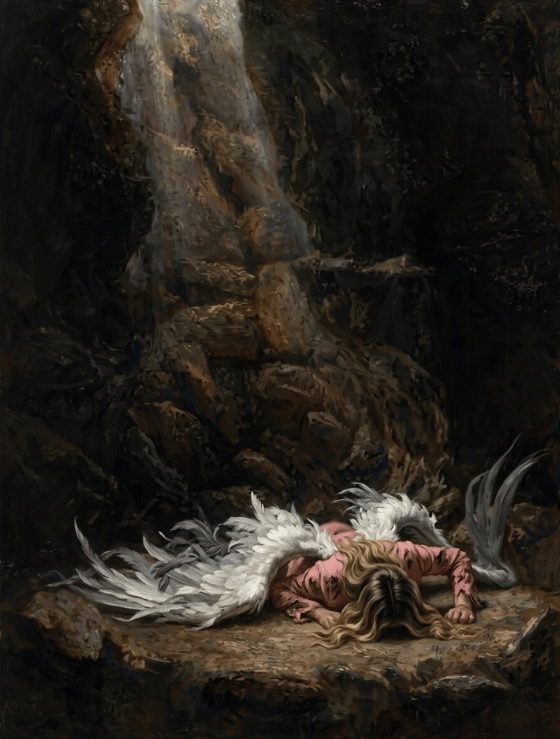
My fingernails attempted to find purchase in the wood. But the paint was too thick, too many years of it, and yet I gripped the door frame as though the house itself might save me — as though tucking myself between the pillars would save me from the storm within. It didn't. The convulsions moved through me the way a storm moves through a building it has already decided to take: not asking permission, not pausing, not interested in my opinion of the matter.
The body, in extremity, is smarter than the mind. Instinct sent me to the center of my home, to the strongest frame, the way people in earthquake countries know to stand under a doorway and let the world shake. My world was shaking. I let it.
My ears felt muffled, stuffed with cotton. I couldn't hear anything over my own sobs so I stopped trying to breathe around them and simply surrendered — which is, as it turns out, exactly what the moment required.
Here is what I could not have known then, slumped on the creaky wood floor of my Montrose apartment: the world was not crashing down around me. It was unlocking.
What I mistook for an ending was, in fact, a door. I just couldn't see it yet because I was busy trying to hold up the frame of everything I'd spent two years building.
That kind of devastation — the kind that takes everything, that takes the version of yourself you had carefully constructed and believed permanent — it doesn't arrive as a scented-invitation. It arrives as a brutal tidal wave. You brace for it. You try to outswim it. And when it takes you anyway, when you surface on the other side gasping and half-drowned and entirely reconfigured, something strange has happened as the waves kept you pinned to the ocean floor: the question you were too comfortable to ask yourself has finally become unavoidable.
What do I actually want?
It is, in my experience, the most dangerous and most important question a person can face. You cannot ask it from the middle. You cannot ask it from a life that is mostly fine, mostly functional, mostly going according to plan. You can only ask it from the bottom of the hole. Which is why the bottom of the hole is, I would argue, the luckiest place to be.
II. Every Mythology Knew this First
The ancient Greeks had a word for it: katabasis1. Literally, a going down. The hero's necessary descent before any ascent becomes possible. From what I can recall from Mrs. Hungerford, 9th grade Ancient Literature class, the stories went something like this: Odysseus into the underworld to speak with the dead. Orpheus into Tartarus, following what he loved. Persephone swallowed by the earth itself — and from that swallowing, an entire season born.
Every mythology worth its salt builds this passage in, not as tragedy, but as architecture. The descent is not the detour. It is the road.
The Egyptians went further. Their Bennu bird2 — the creature that would eventually become our phoenix — did not rise from ashes in spite of burning. It generated the fire itself, willingly, then waited in the heat of its own destruction for what came next. The Bennu was sacred to Ra, the sun god, because the ancient Egyptians understood something we keep having to relearn: the cycle does not begin with the rising. It begins with the burning. You cannot have one without the other, and pretending otherwise is simply a failure of sequence.
Neuroscience, as it happens, agrees.3 The brain cannot build new neural architecture without first dismantling old patterns — literally cannot forge new pathways while the old ones remain intact and dominant. Grief, loss, rupture: these are not malfunctions of the human system. They are the system, doing exactly what it was designed to do. What feels like breaking is, at the cellular level, rewiring. The worst night of your life is your nervous system clearing the ground for whatever comes next.
The universe doesn't send you catastrophe. It sends you a door. The catastrophe is just how it knocks.
I did not know any of this that night in Houston. I knew only the coolness of the floor, the molding of the door frame, the particular sound of silence that comes after the kind of cathartic crying that empties you out completely. But emptied is another word for open. And open, as I would spend the next three years discovering, is the only state in which anything new can arrive.
The question is not whether devastation will find you. It will. It finds everyone. The question is what you do in the moment after the shaking stops — when you're sitting on the floor with everything gone and the air in the room is still and, if you're paying attention, almost anything is possible.
From the ground, I looked up at my bookcase.
There, gathering four years of dust, hung a polo mallet.
III. The Pinprick of Light
It had been four years since I'd lived in Argentina, and before the grief had finished metabolizing — before I'd even stood up from that floor — something had already decided what came next. I just wasn't aware enough yet to know it was a decision.
The road back was not direct. It never is. There were three months of national parks, alone, hiking an average of sixteen miles every other day — the kind of physical exertion that gets one out of the mind and into the body. There was tourist-free Egypt, traversed entirely by myself in the middle of peak COVID, October 2020 to celebrate my 30th birthday, which is either the bravest or most unhinged thing I have ever done and I refuse to decide which. There was a ski trip that involved kissing a very attractive snowboarder, which I mention only because it is important context for the full emotional arc. And then, one day — after all of that doing and hiking and kissing and wandering — I noticed that I had arrived somewhere on the other side of the healing. That I was done with recovery and ready, finally, for the real business: living in my purpose.
February 2021. Houston roads still glazed with ice. One of the worst freezes in Texas history. I packed everything I owned into my Honda Civic and pointed it toward St. Petersburg/Sarasota, Florida, which I had chosen because the polo season lives there in winter and I had decided, with the quiet certainty of someone who has run out of reasons to be cautious, that polo was what I was coming back for.
Sixteen hours of driving later, I found the house I had booked sight-unseen for an entire year.
It was, to deploy a technical term, a moldy hellhole.
My mattress had not yet arrived, so I slept on a yoga mat on the floor of my new life, exhausted, staring at the ceiling of a house that smelled of mildew, thinking: what the hell have you done this time, Amanda.
But isn't this always how it begins — when we venture toward something that actually matters? The universe says yes, and then immediately hands you a comma.
It does not say yes and hand you a red carpet. It says yes and hands you a yoga mat and a mold problem and sixteen hours of bad highway radio and a house that looked nothing like the photographs. It says: you wanted this. Here it is. Now prove it.
I proved it. My living situation sorted itself. My vigor returned. And three weeks after arriving in Florida, I showed up to my first day of training at the Sarasota Polo Club — which, in the architecture of what was about to become my life, was not simply a polo club. It was the first one.
IV. Scott Has No Interest in Your Backstory
At this point, it had been five years since I'd stood on a polo field. Five years since Argentina, where I trained every single day for three months and the grooms — bless them — had not only tacked up my horse but had also insisted on properly polishing my boots, because they could not bear to watch a lady do it herself. It was the kind of world where social hierarchy kept the polo world running like a well-oiled machine.
My new coach, Scott, did not perceive me to be a lady, and his polo machine required my input.
"Okay," he said, looking at me the way a border collie looks at a sheep it has already categorized. "Tack up. Let's get started."
"Huh?"
I had never tacked up my own horse. This had never been relevant information until this precise moment. Scott, who bore the spiritual energy of Simon Cowell at a Gordon Ramsay convention, observed me with the expression of a man cataloguing my flaws in real time and proceeded to explain, slowly, how one attaches a saddle to a horse. I felt — in equal measure and simultaneously — embarrassed and relieved.
What followed was one of the more humbling stretches of my adult life. I could not do the things I knew how to do. My body had forgotten what my mind still remembered: my seat was wrong, my hips were wrong, my mallet swing was wrong. I could not control the animal beneath me. I could not lift the mallet. My teammate — a woman in her sixties who had been playing longer than I'd been alive — screamed across the field at me: "Find your man! Man-line-ball!" Over and over, while I lost both my man and the line and frequently the ball.
It was, in short, humiliating. And it was also, in ways I wouldn't understand for another fifteen months, exactly right.
Because here is what the humiliation required of me: it required that I show up anyway. The next day, and the day after that, and all the days of that Florida winter — tears and blood and sweat and the particular soreness of muscles that haven't been asked this question in years. By the end of three months, I was back. Not where I'd been. Better. The kind of better that is only available to someone who has had to rebuild from the floor up and therefore knows, with great precision, exactly what the floor is made of.
At the end of the season, Scott looked me up and down — the full Simon Cowell assessment — and said:
"You got pretty good, Leon."
It was the highest praise available in his particular vocabulary, and it lit something in me that I was not prepared to extinguish. The Florida season ends in May because the horses cannot work in that heat, and neither, frankly, can anyone else. But the season doesn't end everywhere all at once. It migrates north. And I had not come this far, had not packed a Civic in the ice, had not slept on a yoga mat in a mold house, had not been publicly humiliated on a polo field for three months, to simply stop because the calendar said so.
I chased the season north. And somewhere in the chasing, what had started as a personal reclamation became something no one, living or dead, had ever done before.
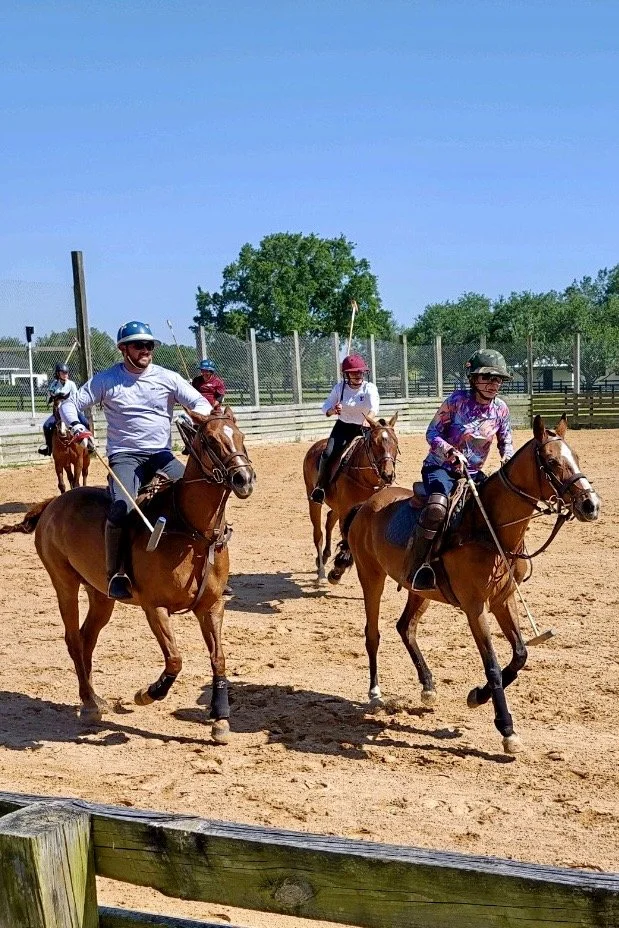
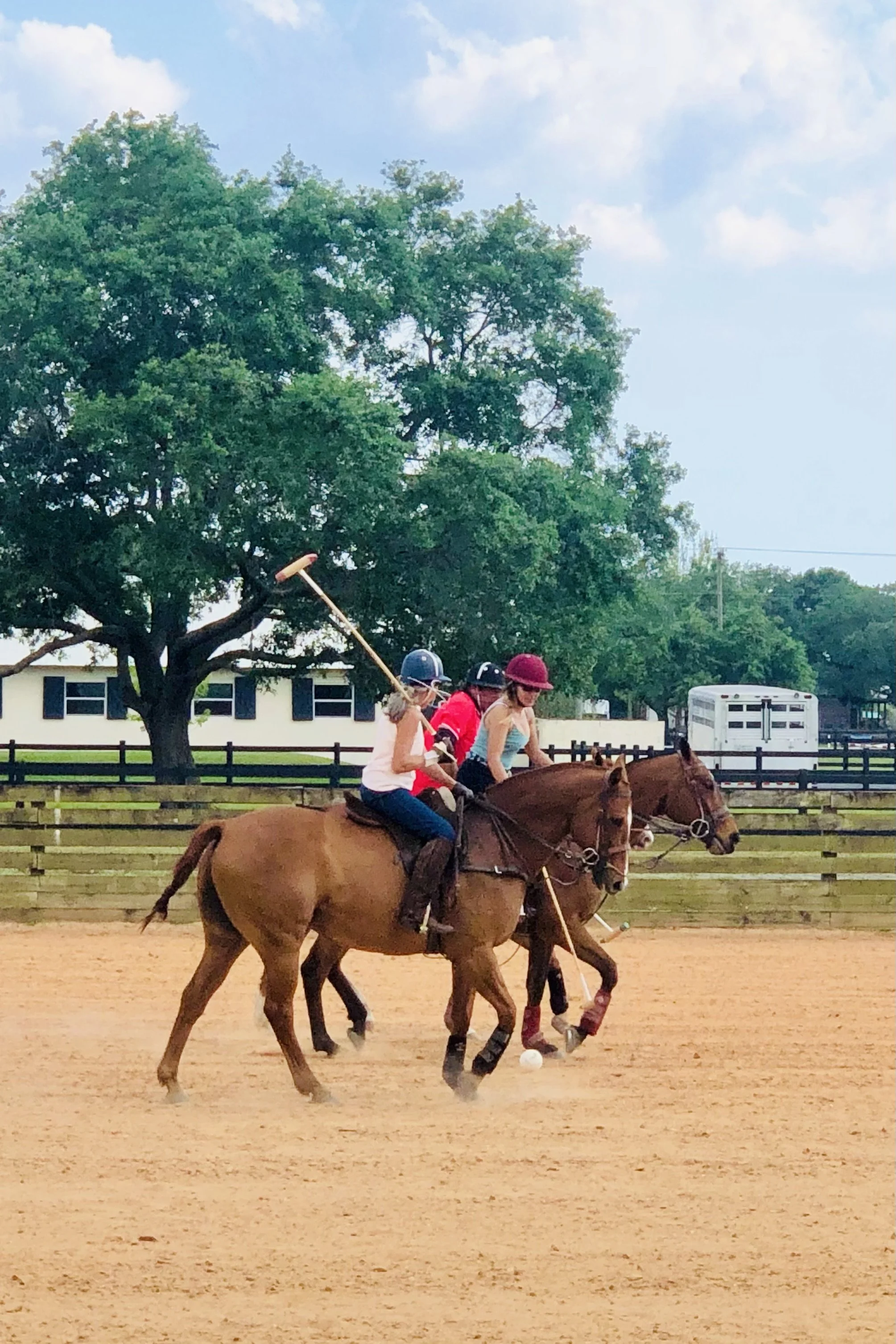
The website said there were 180 polo clubs in America. I had just played the first one.
I was going to play all of them.
V. The Readiness
There is a particular cruelty we perform on ourselves, and we do it so routinely we have stopped noticing it. We look at the life we are living — the one that is mostly fine, mostly functional, mostly going according to someone else's idea of sequence — and we decide that the window has closed. That the thing we actually wanted was available only to a younger version of us, one who doesn't have so many obligations, one who made different choices at the right time, and that version is gone now, so.
So nothing. That sentence just ends there. We let it.
Here is what I want to say to that, directly, with love and without patience: you have confused someone else's timeline for a law of physics.
Vera Wang did not design her first wedding dress until she was forty.4 Not her best dress. Her first one. The woman who would eventually become synonymous with the word bridal spent the first four decades of her life doing something else entirely, and the industry did not collapse in her absence — it simply waited. Colonel Sanders franchised Kentucky Fried Chicken at sixty-five,5 an age at which most people are calculating their exit, not their entrance. Julia Child published her first cookbook at forty-nine.6 Toni Morrison wrote The Bluest Eye at thirty-nine,7 which in literary debut terms is considered, absurdly, late.
These are not feel-good exceptions. They are the rule that the highlight reel obscures.
The people we cite as proof that it's too late are almost never the people who actually tried late. They are the people who tried early and got lucky early, and we took that luck as evidence of a deadline that does not exist.
Your thing — the one that makes you feel alive in a way that paying the electricity bill does not — does not have an expiration date stamped on it. It has a readiness date. And readiness, as it turns out, often requires a certain amount of prior demolition.
I didn't grow up on horses. I didn't discover polo until my mid-twenties, at a practice I attended mostly out of curiosity, and the moment I swung a mallet for the first time I understood something I hadn't had language for before: that the body recognizes its purpose before the mind catches up. The mind was still making arguments. The body had already decided.
Your thing doesn't have to be polo. But it is something. And if you haven't found it yet, I would gently suggest that you check your floor — because the view from down there has a way of clarifying things that the view from comfortable never will.
V1. Get Up
I am writing this from Bali, which is a sentence I do not take for granted.
Between the Montrose apartment floor and this desk, there is a year of polo fields, 180 clubs, one very patient Honda Civic, a series of horses I had never met before the moment I swung a mallet at their side, a cast of characters so improbable that I keep checking my own notes to confirm they were real, and more than a few moments where the bravest available option was simply showing up to the next one.
It was not a straight line. Straight lines are for people who already know where they're going, and I was not that person. I was the person on the floor of the Montrose apartment, gripping a door frame, unable to hear anything over the sound of her own grief. I was the person sleeping on a yoga mat in a mold house in Florida, questioning every decision that had led to this particular popcorn ceiling.
And I was, as it turned out, exactly where I was supposed to be.
This is what I know now that I did not know then: devastation is not the interruption of your life. It is the architecture of it. The Bennu bird does not generate the fire by accident. It generates the fire because it understands, in whatever way ancient sacred birds understand things, that what comes next cannot arrive until what came before has finished burning.
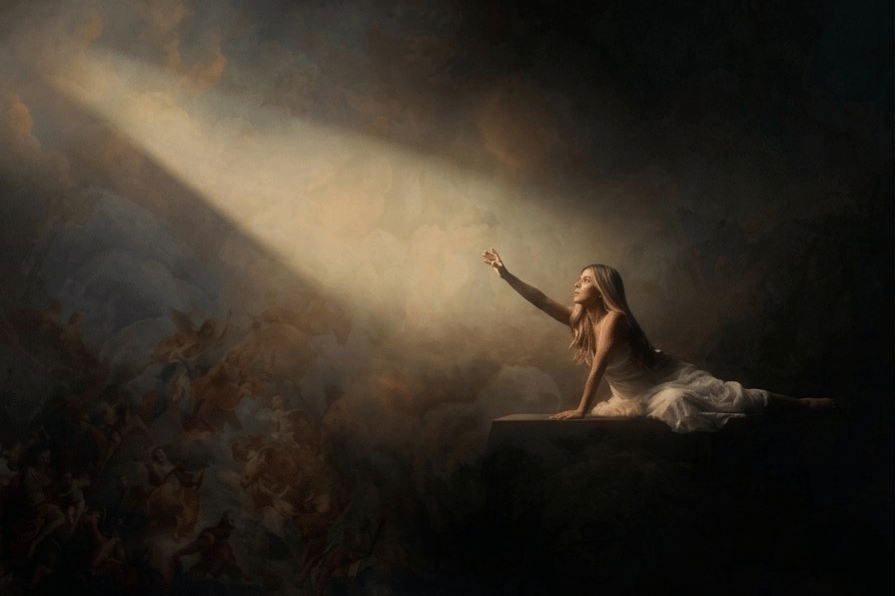
If you are on your floor right now — if your world is shaking and the room is loud with it and you are gripping whatever frame is closest — I want you to hear this:
You are not at the end of something. You are at the beginning of the thing that was always waiting for the other thing to finish.
The universe knocked. It used a wrecking ball because that is, sometimes, what the door requires.
Lucky you.
The story of what happened next — all 180 clubs of it, the horses and the heartbreaks and the moments that made me put down my mallet and sit in the field and laugh at the specific absurdity of the life I had somehow built — that story is coming.
For now: get up off the floor.
Everything is about to get interesting.
With Love,
Amanda
P.S. If you’re curious about the upcoming polo book or want to join on upcoming polo adventures, I’d love to invite you to subscribe to my Youtube channel.
CITATIONS & NOTES
1. Katabasis — ancient Greek literary concept of the hero's descent into the underworld before ascent. Examples include Odysseus (Homer, Odyssey, Book XI), Orpheus (Ovid, Metamorphoses, Book X), and Persephone (Homeric Hymn to Demeter). en.wikipedia.org/wiki/Katabasis
2. Bennu bird — self-created Egyptian deity, Ba (soul) of Ra, original inspiration for the Greek phoenix. Created itself from fire burning in the sacred persea tree at the temple of Ra in Heliopolis. Egyptian sources describe the Bennu as self-renewing rather than destroyed and reborn — the fiery death-and-rebirth cycle is the later Greek phoenix tradition. The essay draws on both traditions. en.wikipedia.org/wiki/Bennu
3. Neuroplasticity and grief — the brain's capacity to form new neural pathways (neuroplasticity) requires the pruning of existing ones. Research on grief and neural reorganization: O'Connor, M.F. (2019). Grief: A Brief History of Research on How Body, Mind, and Brain Adapt. Psychosomatic Medicine, 81(8), 731–738. doi.org/10.1097/PSY.0000000000000717
4. Vera Wang opened her first bridal boutique at age 40 after designing her own wedding dress at 39. Source: CNBC Make It interview with Vera Wang, May 2021. Wang: "I thought maybe it's just too late for me." cnbc.com/2021/05/18/vera-wang-on-starting-her-company-at-40-.html
5. Colonel Sanders — Note on age: the first KFC franchise opened in 1952 when Sanders was 61–62. The figure of 65 is widely cited in popular shorthand and refers approximately to the period when he lost his restaurant (1956, age 66) and devoted himself full-time to franchising. en.wikipedia.org/wiki/Colonel_Sanders
6. Julia Child was born August 15, 1912. Mastering the Art of French Cooking, Vol. 1 was published October 1961, when Child was 49. en.wikipedia.org/wiki/Mastering_the_Art_of_French_Cooking
7. Toni Morrison published The Bluest Eye in 1970 at age 39, while working as an editor at Random House and raising two children as a single mother. en.wikipedia.org/wiki/Toni_Morrison