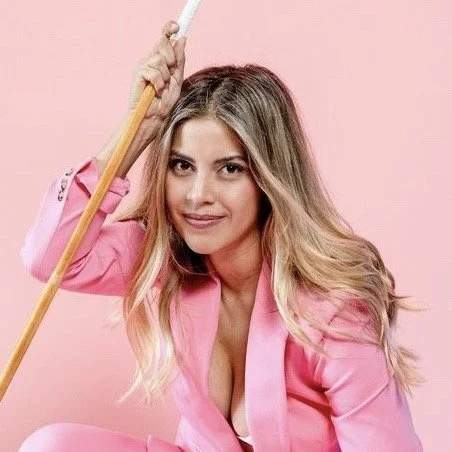
The short answer: When I was growing up, a well-meaning uncle told me, "Amanda, you're pretty and you're smart. You can't be athletic too. Just be glad you got two out of three." I came in last at weekend track meets, and I believed him for years. Then, on a polo field in California's Santa Ynez Valley, Memo Gracida, who has won more U.S. Open polo titles than anyone in history, looked at me and said, "You look really athletic. You're an athlete, I can tell."
The label
My uncle meant well. Pretty, smart, not athletic. Two out of three.
The track meets seemed to prove him right. Weekend after weekend, I came in last. I was told I wasn't an athlete, and for a long time I believed it.
What labels do to performance
I studied cognitive neuroscience, and one of the most humbling findings in psychology is how much a label can change what a body does. In a 1999 study, psychologist Jeff Stone and his colleagues had athletes putt golf balls. When white participants were told the task measured "natural athletic ability," they performed worse. When Black participants were told the same task measured "sports intelligence," they performed worse. Same task, same kind of athletes. The only thing that changed was the story attached to the task.
Researchers call this stereotype threat. When you're reminded of a belief that people like you aren't good at something, part of your attention goes to the threat instead of the task. Later studies found the same pattern in women's sport: female soccer players under stereotype threat completed a dribbling drill more slowly.
A label describes you, and it also takes up space in your head while you're trying to perform.
How polo answered him
I didn't find polo until my twenties, through a silent auction nobody else wanted to bid on (the whole story is here). After my first lesson I felt more alive and more powerful than I ever had. Nobody on a polo field cared about my track times. The horse certainly didn't.
I trained every day for three months in Argentina. Years later I rebuilt my riding from the ground up in Florida, then set out to play every polo club in America.
The Gracidas
The Gracida family is polo royalty. Memo Gracida carried a 10-goal rating, the highest in the sport, for two decades, and has won the U.S. Open more times than any other player. He and his wife, Meghan, built La Herradura Polo Club in the Santa Ynez Valley.
I visited on my tour. Memo took me to lunch along with Julio, and he loved to tell stories. At one point he said, "You should write a book." Then, "You are so brave." And then the one I'll keep forever: "You look really athletic. You're an athlete, I can tell."
The best players in the world turned out to be my favorite hype team. One sentence from a man who has seen every kind of athlete there is undid a label I'd carried since I was a kid.
If someone handed you a two-out-of-three label
Notice whose voice it is. Most of our limits were installed by someone else, often someone who meant well.
Test it in a new arena. I was "not athletic" on a track. On a horse, the rules were different.
Choose the voices you keep. You can't control who labels you. You can control who you spend your time around, and I choose the people who say "you're an athlete, I can tell."
Polo is also one of the few sports where a woman can play shoulder to shoulder with men at the highest level. I wrote about that in women in polo.
If you want to find out what kind of athlete you are on a horse, start with how to start playing polo, and follow PoloFlow, the app I'm building to make finding a game easy. Polo, wherever you are.